Saturday, August 26, 2006

Kids excited about Reforestation

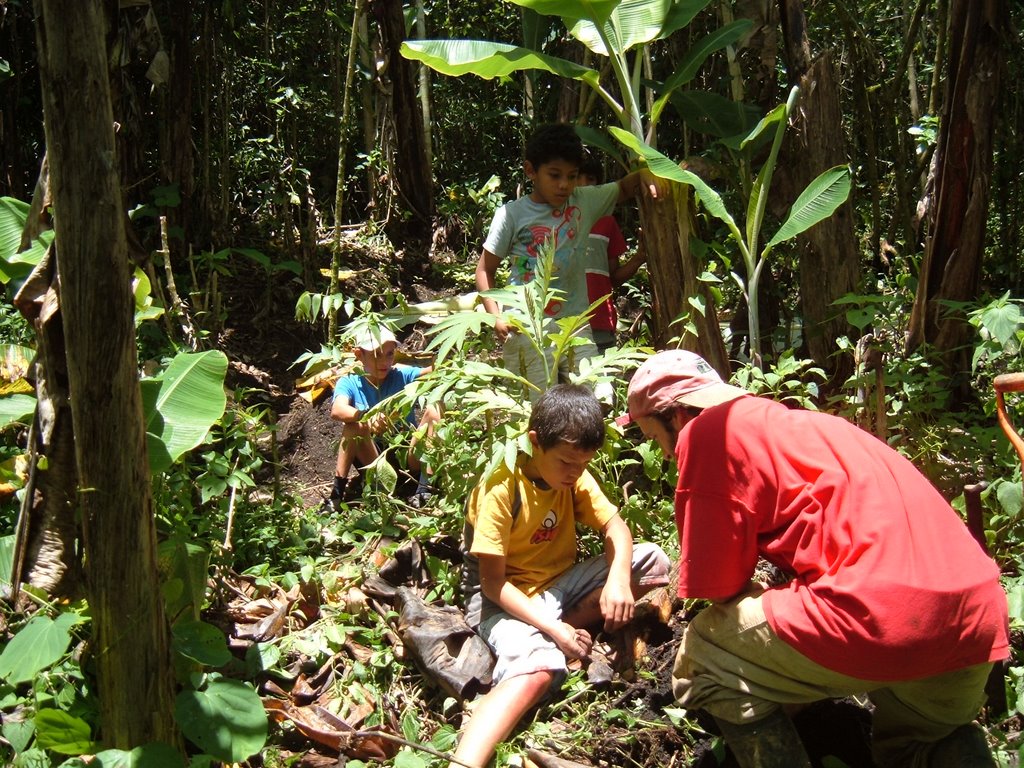
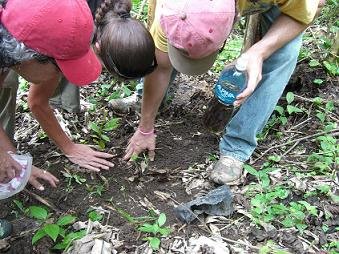
One day Eliot met some of the local kids at the elementary school and invited them down to the finca to show them our seedling nursery. A month later the kids showed up wondering why we weren't at the farm that morning. I reminded them that that we had invited them a month ago, and things do happen sometimes. Since then the kids have become really excited about trees, and come over almost daily wanting to help us. Sometimes they even teach us a thing or two. When Greivin (10 yrs old) shows up with his brothers Luigi (7) and Jhonny (12..and thats how he spells his name), they almost always bring seeds. Some seeds are endangered species that we havent even found yet.


Being around the kids has reminded me of how, as we get older, we become estranged from our fundamental connection to mother earth. Showing the kids how tamarinds sprout or talking about the monkies and snakes that we've seen genuinely excites them. The excitement is contagious.


I believe that the youth still posses an inherent connection to the environment, born with a love for their environment, instead of a need to dominate it. If we can harbor and develop this passion among children, we are that much closer to reparing what our forefathers have squandered. Cheers to the YOUTH!!!


Pura Vida
Brendan

Friday, August 25, 2006

Learning from the Masters: Farmers teach us how to make and mix suelo

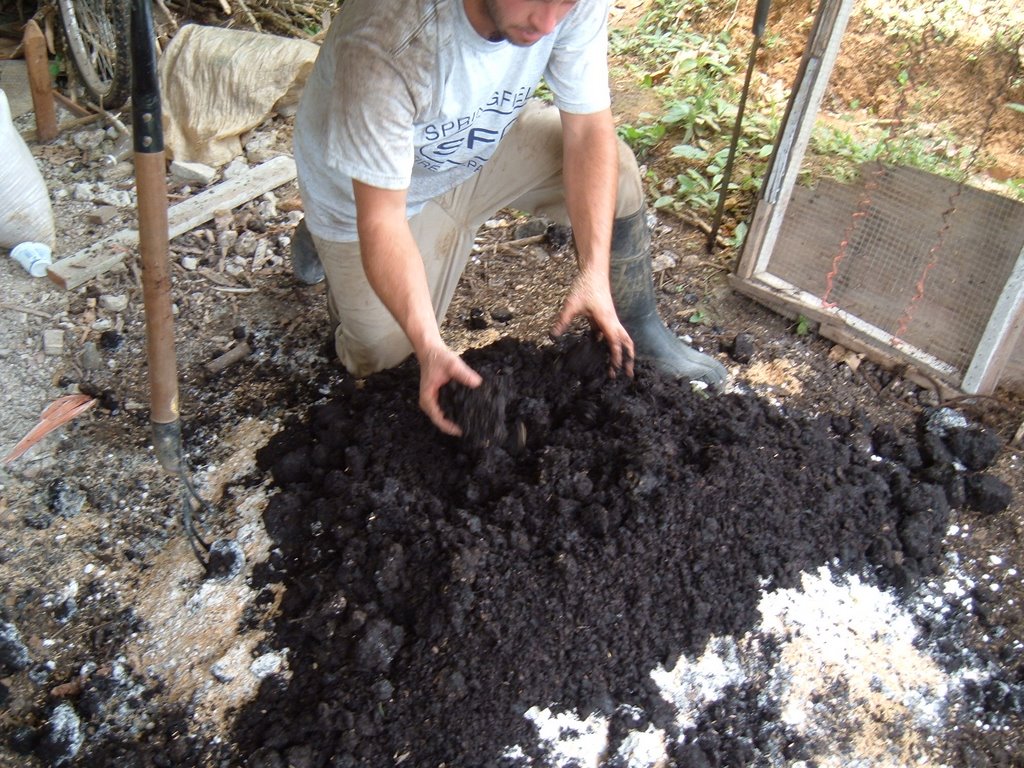
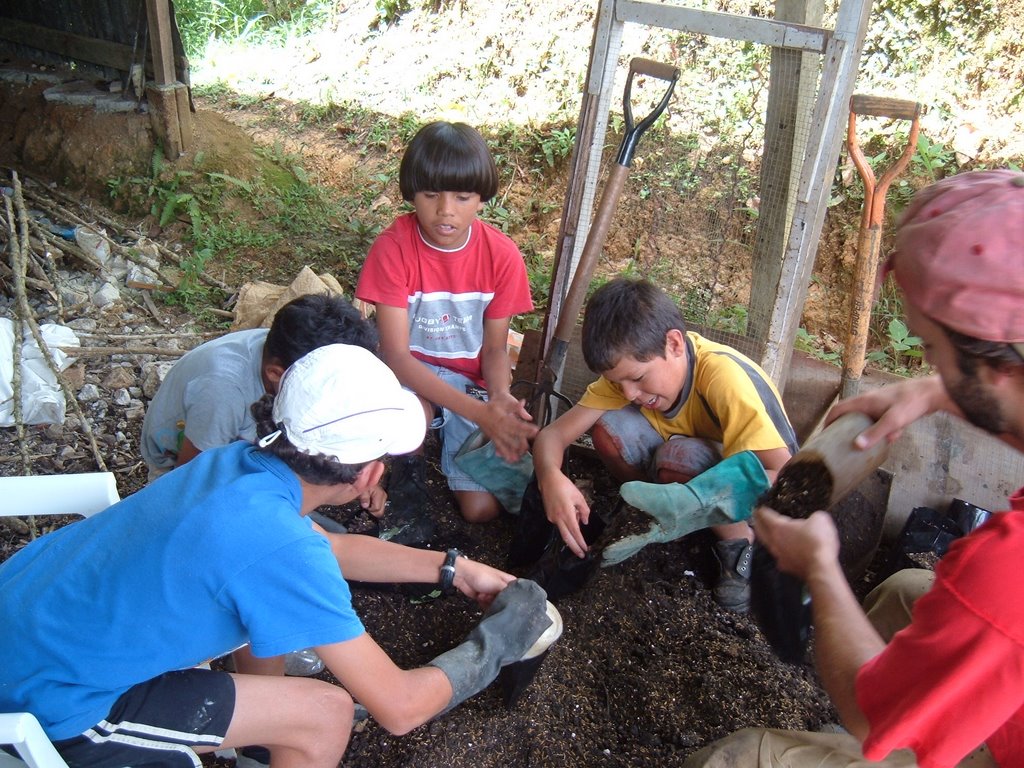
The pictures below illustrate the process of mixing soil practiced by many local farmers. This soil recipe has traditionally been used for small coffee trees. This specific method was tought to us by our neighbor, Harold. This is what we use for our seedlings.

Step 1
Start with a base of 1 part topsoil from the farm, then from into a flat-top mound

Step 2
Add a thin layer of cascara de arroz (rice husks)untill it totally covers the topsoil

Step 3
Add a thin layter of Cal (Calcium) in the same manor as step 2


Step 4
Add 1 part brosa de café (composted coffee husks), and crumble by hand


Step 5
Repeat step 2 and 3


Step 6
Mix, making sure the moist brosa de cafe is fully broken down


Step 7
Fill the bags, give it the ol´ pound and shake to ensure a well-filled bag


Step 8
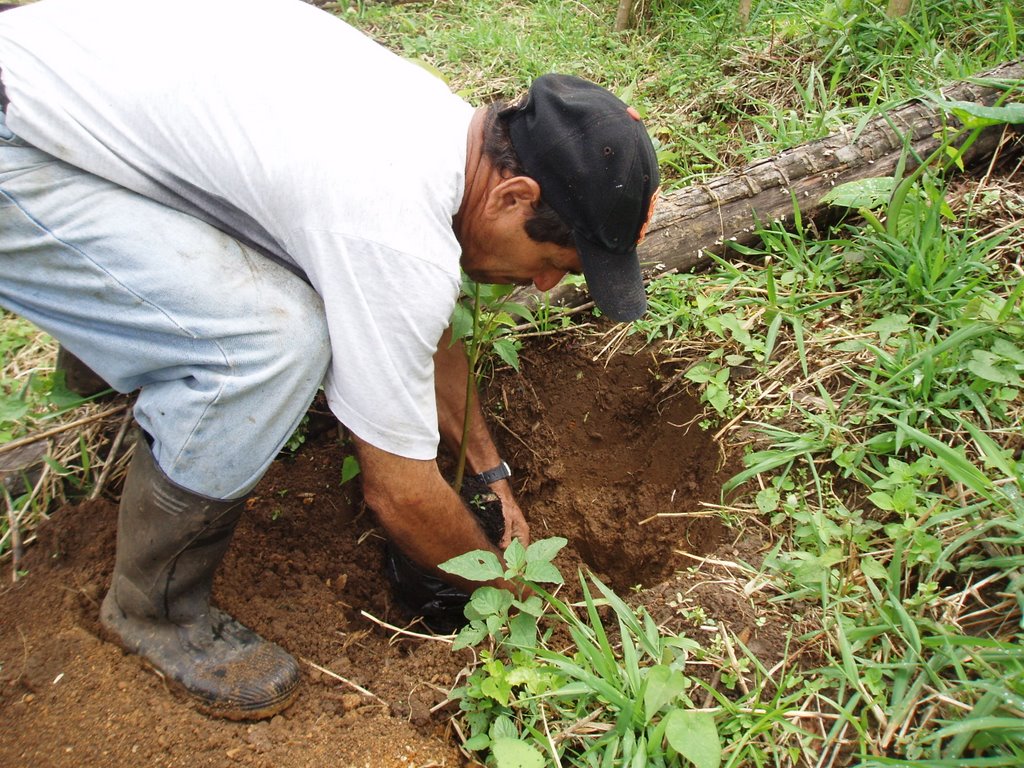
Transplant the seedling


This method has been practiced for generations and has ensured the health and nutrient demands of millions of coffee seedlings, (while they wait in the shade to be planted).

Monday, August 21, 2006

Time to Plant... More Questions Sprout

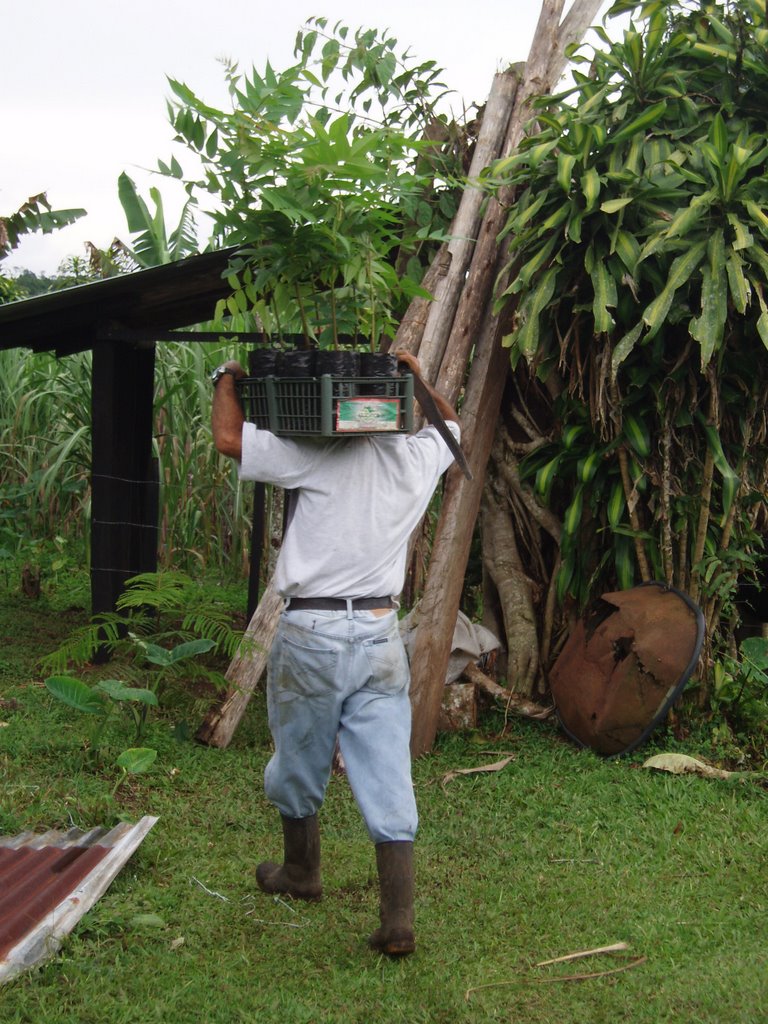
La Cunicula (the name for the weird weather period in July and August) is over and its time to plant. We have 120 Nogales (Black Walnut) bagged-up, ready for distribution. William Mendez (pictured here) came by this morning to pick up his order for 33. ¿Que vale? After numerous reminders that we are providing a free service to the community, he still asks me how much they cost. He was happy once again to hear that they were free. Tomorrow I’m going over to help William put them in the ground. We will be reforesting the riparian (river ecosystem) hillside on the south part of his farm. These fast growing species will grow tall and extend their roots into the bank of the river, helping to combat erosion, while the leafy canopy will provide shade protecting the soil from too much sun exposure.

On Wednesday I will deliver another 30 Nogales to Roberto Jiménez, who has part of his land under restoration. A farmer with decades of experience, Roberto said he really loves the Nogales. He told me yesterday that the majority of trees that were planted for reforestation have died because they were so little when they were planted. He was happy to hear that our Nogales are 2-3 feet high and well established. The roots are actually breaking through the bottom of the bag. Roberto asked me if I could help plant the trees because he is still recovering from his kidney stone operation. "Por supuesto", of course, I told him.

Since Finca Project has begun distribution, everyone has been asking how much the saplings cost. After reminding people that they are free, they began "selling" like hotcakes. I paused to think about the consequences of our project. We obviously want to get as many trees out into the community as we can, BUT it wont do much (long-term) good to give away trees to farmers who are going to cut them down in 5 or 10 years when they have some sort of economic value. We also don’t want to undercut local nursery business by dissolving the market for hardwood, fruit, and shade trees. The closest substantial nursery is in San Vito, which is half an hour away, and I´m sure there are smaller ones all around. This calls for market research. As for creating incentives to alleviate pressures to cut down trees, well, that’s gonna be tough to figure out. Some things are out of our control, and finding community-level solutions to problems caused by global economic structures will take creativity, ingenuity, and commited community interest. For now, we will begin to formalize the distribution process by enrolling farmers in our micro-reforestation projects, which involves a meeting to review guidelines for participation. This will, at least, ensure understanding of our project and reinforce the specific beneficial details of micro-reforestation in general.

So long from the Farm,
Pura Vida
Brendan

Monday, August 07, 2006

A New Intern: Worms and Trees

We have a new intern from UC Santa Cruz. Daniel Farber is doing an experiment on the use of worm compost as a fertilizer on our tree seedlings.


Daniel is doing his experiment on our manzanas de agua, Syzygium malaccense. This is a common fruit tree with shallow roots. This tree has value to our reforestation project because it helps protect water sheds by holding the water level high, and it provides an edible fruit to local farmers.


Daniel is using 100 seedlings for his experiment. For his control, he has put half of them in bags with a standard mixture used in coffee nurseries of dirt, rice husks, brosa (coffee husks), and calcium. The other 50 seedlings were placed in a bag with half of this mixture and half worm compost from Humberto Nuñigas worm farm.


Daniel measures the trunk and the leaf span every week. He will be measuring for a total of 7 weeks. This information will be valuable to us as we expand our own worm compost production and seedling nursery. Humberto Zuñiga promises us that worm compost is the best abono (fertilizer) there is.

Thursday, August 03, 2006

Back to High School

Today I went back to high school. I was invited as a judge of the 5th Annual Aguabuena Bilingual High School English Festival. Actually I was invited as a member of the "jury". We had to score students on speeches and songs. We had our own panel, each with a bottle of water and a handmade souvenir to remind us of this special day.

I should have known better than to show up on time. I met Jacob, one of the two Peace Corps volunteers, on the road heading down to the high school. His wife, Trina (the other volunteer), was sick. For a long time it looked like we would be the only "jurors". We ended up waiting for over a hour for the teachers to set up all the microphones, speakers, computers, and projectors. I was surprised at what technology the high school has here. Many of the students used Power Point to give their speaches.

The two students that won the speech contest both used Power Point. One was a girl in the third cycle (10th grade, although there is no 12th grade here). She gave her speech on health food vs fat foods. (maybe fast foods). She spoke mostly of McDonalds, which I found strange since the nearest McDonalds is 4 hours away in Panama. The other student that won for the fourth cycle (11th grade) gave his speech on the history of vampires. I really liked it. There was also a singing contest but only two girls competed. And there was supposed to be a drama show, but the students never showed up.

There only ended up being 3 of us jurors. The other one was an exchange student from Australia. It was hard to pick the winners. In the end, the three of us went up on the stage, and I announced the winners on the microphone. Everyone applauded, and I felt like a rock star.

Then we ate lunch with the principal and all the English teachers. We talked about our project. The teachers were very excited to work with us. It looks like next year we are going to have alot of support from the high school here for our reforestation projects. As we left the school, I found a nogal tree that had just seeded. I collected a bunch of seeds and walked home. It was still sunny at 12:30.

Friday, July 28, 2006

Problems Finding a Market

Yesterday was the first day of our first orange harvest, cosecha de naranjas. We have probably, I have never counted them, but probably over 100 orange trees. Most of them are on top of the hill that is our farm and have been taken over by 7 years of neglect, returning it to some sort of jungle - an orange jungle with bananas and plantains and coffee that pop out at you as you liberate them with your machete from intrusive vines and trees that turn into vines (or vines that turn into trees). I don’t really know what to do with our oranges. We have so many. I pick them while they are still a little green. There are tons of bugs, fungi, squirrels, birds, and poachers that will get them if I wait too long. I made orange juice yesterday. It was awesome. We have this metal pump-looking citrus juicer, that isn’t very efficient for high quantity juicing, but I made enough to give the Mendez family a big bottle of it.

They asked me if I am going to sell oranges. Tal vez, I said. Maybe I will sell it to Victor, William and Flor´s son-in-law. He is a verdurero who sells vegetables down in the low lands and on the Panamanian border in Ciudad Neilly, Paso Canoas, Laurel, La Cuesta, etc (all formerly United Fruit Company towns). He buys most of his vegetables and fruit from Cartago and Alajuela, the major large-scale agricultural centers of Costa Rica just outside of San Jose. These vegetables travel 8 hours on a truck to get here up in the mountains, where then Victor pays a high price, loads them up in his truck, and he drives 1-3 hours down the mountain to sell thm. Oddly, most of the vegetables he buys from San Jose are grown here as well, and he could buy them from the farmers here for much cheaper. So why doesn’t he just buy them from the local farmers? or why don’t the local farmers just sell locally anyways? why would I have to sell my oranges some where at least 1 hour away?

The people here are accustomed to this reliance on the large-scale producers because there is consistency. Ok, that makes sense. So the small scale farmers who live in this region can sell to some verdureros, but at prices half as much as the verdureros will pay the Cartageros. The farmers here just sell there products as a minimal supplement to the corporate-run agriculture of San Jose. So everytime I have this conversation with local farmers, I get sorta upset in my gringo-seeking-freer-fair-trade and I say so then why don’t we just start our own market here in Aguabuena…. We can sell our oranges. We can show off our seedlings and motivate people about reforestation. It would be beautiful. But then Julie tells me that the people here wouldn’t like it. They are too accustomed to going to house to house for what they want. Calos Porras for milk, William Mendez for chayote or cilantro, etc. But then Humberto Zuñiga and his association ASOCOPRODE (Association de Productores) are very excited about the idea of a feria, kinda like a local farmers market. Anyways I am pushing for the feria, we will see what happens. And most likely things are going to change when TLC (tratado de libre commercio), the Costa Rican side of CAFTA is ratified, although most people here think that this future looks grim.

Thursday, July 20, 2006

A Day in the Life...

.....of a reforestero

Because I frequently am asked, "So Eliot, what exactly do you do down there?" or "What is a typical day like on the farm?", I decided to give a schedule of what I did yesterday....all days being more or less similar. (Although yesterday seemed like a long day)

Wednesday, July 19th

7:00 Woke up. Made coffee. Ate breakfast - granola, yogurt, and papaya. Read for one hour.

8:00 Washed my clothes by hand and hung them up to dry. It was deceivingly sunny.

8:30 Tended the worm farm. Watered the worms. Checked the compost. Checked on the trees. Realized that I had run out of bags to transplant trees into. Became worried that the trees needed to be transplanted soon. Relaxed because I realized once again that they are trees, and they want to live. Found some hardwoods had sprouted that I was worried never would. Became happy. Checked on the vegetable garden. Wondered why some kale leaves look like they were cut in half. Was it a bug or a falling guava? I had to fill up our biodigestor with more water. It smelled surprisingly bad.

10:00 Started to cloud up. Was worried it would rain as hard as it did the day before when I was stuck in Aguabuena because the road to Coopabuena had flooded over. A UCSC student came by, sortof lost (as usual), and asked if I could help with with his research project. We brainstormed. He decided he would research different fertilizing methods used on our seedlings.

10:20 Told the student that I had to take a shower and he should just sit there and think about his project. Showered. Dressed. Took my clothes that were not dry and hung them up in the garage.

10:30 Walked with UCSC student to my neighbors, Harold, to ask him to explain to Daniel (the student) what kind of fertilizer is usually used on coffee seedlings. Just dirt, rice husks, and calcium.

10:45 Walked with UCSC student to Coope Pueblos office for an HTML lesson given in gringo spanish by a student from Evergreen. Walked instead of rode my bike because I had left my bike in the office the day before because of the flood.

11:15 HTML lesson. Learned about tables "Mesas".

12:30 Checked email. Ate fried chicken for lunch at the fried chicken place next to the office. (I hardly ever eat out but I was starving).

1:00 Rode bike back to Mendez house to meet with Becky, Ian, and Julie to talk about restructuring the CAN internship program. Talked forever. Drank coffee. Came up with idea that I will lead a seminar every week for students. Started raining very hard.

4:00 Went to Ferreteria (hard ware store) to ask about bags for the trees. They didnt have both the sizes I needed.

4:30 Went home. Ate dinner early - beans, rice, salad, spinach quiche.

5:30 Headed back to Aguabuena to start English class.

6:00 Helped Peace Corps teach "curso de ingles" to 50 students aged 8-50. The 12 year old boys were better behaved and made paper hats instead of airplanes this time.

8:30 Went to Robertos Bar with the Peace Corps volunteers. Had two Imperials. I dont drink very often but English class is rough.

9:30 Rode bike home in the rain.

10:00 Fell asleep.

Tuesday, July 18, 2006

Ashes and Trees

A couple of weeks ago I got a very strange request. I was asked if a tree could be planted on our farm with the ashes of a dead man named Deane Adams.

The woman who asked me was Arlene. She had come to Aguabuena as a prize "vacation" from a Starbucks raffle. The group of winners, sponsored by Starbucks and Earthwatch, came to aid Dr Karen Holl´s reforestation study in our region of Coto Brus. Arlene along with two other women, Jessie and Samantha, were staying at the Mendez house just up the hill from our farm. I spent alot of evenings with them. And one day, Arlene asked if she could find a resting place for Deane´s ashes on the finca.

Arlene had traveled all the way from Arkansas carrying Deane´s ashes. Arlene never knew Deane. She was asked by his wife, a new co-worker, if she would carry some ashes down to Costa Rica and plant a tree with them. Deane´s dying wish was for part of his ashes to be planted every year with a tree. Since Arlene was going to aid a reforestation project, it seemed to make sense. At first I was worried that Deane might not be a good guy. I dont want the ashes of a bad guy haunting the farm, but then I realized anyone who asks to be planted with a tree when they die cant be too bad. When I die I want to be burried in the ground without a coffin, just a pillow, and a tree planted on top of me. Probably an avocado.

We procrastinated until the last day they were in Aguabuena. Right before the bus came the 4 of us - Arlene, Samantha, Jessie, and I hurried to the finca to plant the tree. Arlene asked Karen Holl if she would donate a tree to Deane and the Finca Project. The tree we planted is a Mayo.


Mayo, Vochysia guatemalensis is a light hardwood canopy tree found throughtout Central America especially here, in the Coto Brus area. This tree produces very beautiful yellow flowers between April and June.

So far the ashes seemed to have made good fertilizer and the tree is growing strong.

Friday, July 14, 2006

A poem for my mom

Today at 9:30 Costa Rican time
When you were in the doctor’s office
Waiting to receive you chemo
I planted a tree for you.
I don’t know what kind of tree it is.
It is from the Guanacaste.
It is funny looking.
Its trunk is thinner at the bottom
Than it is at the top.
But despite this counterintuitiveness
It is a strong tree.

I told you I would be in an orange tree
Meditating for you
At 9:30
But I know that doctors are always late
So I waited until 9:41.
And the orange tree wasn’t as comfortable
As I thought it would be.
So I walked past the orange orchard
To the cattle pasture above my farm
And sat under a poro tree
And meditated with the cows
Overlooking the emerald valley
That pours over the mountains
Falling to the sea below

This is where I was
When you received your chemo.
I figured you would be closing your eyes.
I wanted to take you out of the doctors office
And up to a mountain top
Like the time I dragged you up
To Lake of the Angels.
I tried to summon up all of my strength
And the strength of the land around me
To send you my love
I remembered how hard it was for you
To make it to Lake of the Angels


When I was walking back down to the house
I had to machete my way through
Invasive vines and weeds
That were choking the orange trees
And obscuring the trail.
I passed the tree I planted for you
And imagined it in 50 years
A giant

Thursday, July 13, 2006

William Mendez

The first time William Mendez saw snow was when he stepped out of the airport in Montreal, Canada into a blizzard. This was his first and only time to sneak into the US, mojado (wet, aka illegal...think "wetback"). Although this was more like sneaking in helado (icy).

The coyote had arranged everything for this group of men from Aguabuena, Costa Rica. They were all friends, brothers, fathers, sons. They were to fly to Montreal, claim refugee status, get their bags from baggage claim, walk outside, and the coyote would be there waiting for them with a van.

This group of Costa Rican refugees had a plan to obtain refugee status. They were all going to claim that they were homosexuals being persecuted in the homophobic atmosphere of Costa Rica. (If the thought of "Costa Rican refugees" hasnt already struck a strange note in your mind, it should be known that Costa Rica is probably the most socially liberal countries of all of Latin America.) No one remembers whose idea this was exactly. Now most of them are back here, the coyote owns a bar and sometimes the refugees all meet to reminisce. William was the only one who didnt want to claim his false sexuality. He claimed that he had many enemies in Costa Rica who were out to get him. They were all granted refugee status in Canada.

They all came out of the airport with papers in their hands and waited for the pickup. They were dropped off an hour walk from the border. They crossed in the middle of the night, through a blizzard, not knowing how to walk on snow (or that it was even possible). They walked for 2-3 hours across the border and into New York. Magically, there was a bus the coyote had arranged waiting for them in the middle of nowhere. They drove all day to New Jersey.

William´s son is still in New Jersey. He works as a landscaper. He has a wife and two kids. He loves the US. He has been there for over 5 years now, so he is awaiting the new law that he hopes will give him amnesty. William worked for 9 months mostly at a car wash during the summer. William is back here in Aguabuena. He still wears his tee-shirt from the New Jersey (pronounced New Yersee)car wash. I asked him if he was scared when he crossed the border in the blizzard. He said he had never been so scared in his life, but he was with friends and his son. He complains that New Yersee is too cold in the winter and then too hot in the summer. He had never felt a climate that hot, not even in the low lands of Costa Rica.

I want to tell his story because I think it is appropriate right now. When I was home last month, I got in an argument with one of my best friends about immigration and the new laws, walls, and prisons. My friend told me that foreigners need to respect the laws we have. I know all the arguments about the immigrants who have tons of babies, eat up wellfare, dont pay taxes, and steal our jobs. But living in Costa Rica, I see that there are no jobs here. The people here watch Hollywood movies and North American TV shows. They are innundated with "American" culture. There is not one person in this town that does not think about going to the US to work, for many it is their only dream.

I think that considering the history of the US involvement in Latin American politics and economics, we are responsible for the dreams we invoke in these people. Everyday I talk with teenagers here, and try to convince them not to go to the US. But how can I convince them that their dream is not what it seems? I have the privilege to travel and see the world, why shouldnt they? Yesterday I was talking to my neighbor and good friend Harold, he looked at me strait in the eye and asked "if you were me, would you go??". I though about it for a while. I had to say yes.

Monday, July 03, 2006

¿The World is Flat?

I have decided to start a Book Review section of my blog. This is my fisrt entry.

I just finished reading Thomas Friedman´s book. At first I was resistant to his school-boyish eagerness, bragging about the wonders of Free Trade and Technology. But by the end, I found his argument convincing. I do not share all of his ideas, but, like I said, I found it convincing.

Friedman´s thesis is that, since 1492, the world has become "flatter" through globalization, technology, and the liberation of markets. His idea of "flatness" is a "leveling of the playing field" where individuals can compete and gain power in a more open market. He traces this thread through the technology boom of the late 90´s, outsourcing of jobs, and the rise of India, China, Al-Queda, and Osama bin Laden.

Friedman likes to categorize and number things. There are the "Ten Flatteners", "Globaliation 1.0, 2.0, 3.0", the "5 anti-globalist forces", etc. What caught me off guard was that he placed me along with other "serious, well-meaning environmentalists" in the fifth anti-globalist force group he calls the "how-we-globalize" group. While he has "a lot of respect and sympathy for this group", he believes that we have drowned out or have been pushed to the periphery by anarchist WTO protestors and the other four anti-globalist forces. Well, Mr Friedman, as a spokesman for the "how-we-globalize" group, let´s talk about how we do it. Let´s start with coffee.

While the world ushered in "Globalization 3.0" at the turn of the millenium, and the world was becoming flatter, our community of Aguabuena was completely crushed by the global coffee market. Around the time that oil prices starting going up, skyscrapers going down, the price of coffee bottomed out to the lowest in history. What Friedman does not write about, is the how the flattening of the world affects the environment. Now the price of coffee has gone back up, but the farmers here are fed up with the volatility of the market. They are flattening their farms, cutting down their coffee and shade trees to raise cattle. In the past 4 years, over 50% of coffee farms in our area of Costa Rica have turned to cattle ranching. Cattle ranching is one of the most degrading land-use practices in moist tropical ecosystems. It destroys biodiversity, washes away nutrient-rich top soil, and contaminates water supplies.

Where I think we can take Friedman´s ideas further is to see how the small-scale farmer responds to this "flattening" of the market. I do not consider my self an "anti-globalist", but I am very concerned in "how we globalize". Coope Pueblos, the coffee cooperative here, uses the the "flattening" tools of the internet to create a direct market with consumers in the US. I think this is an awesome accomplishment, but I also think that we must be weary at the speed that technology advances us when it is at the expense of our ecosystems.

Wednesday, June 28, 2006

How a Rainforest Grows

I flew back to Costa Rica this last Friday. I experienced some of the worst (or best?) turbulence I have ever felt flying over a Honduran thunderstorm. I was stuck with a middle seat, but it turned out not to be too bad. To my left (the aisle) was a 15 year old boy named Chris from Albaquerque. He was traveling with his grandma on summer vacation. To my right (window) was a law student named Greg from Univ of Washington. He was coming to Costa Rica to study international human rights law for the summer. The three of us talked the entire trip. It was the best conversation I have ever had on a plane. By the end of the trip, everyone around me asked for a Finca Project brochure. (Apparently I talk loudly.)

Now I am back down south in Aguabuena. There is a new group of students here and an Earthwatch expedition. I had the chance to listen in on Dr Karen Holl´s lecture to the Earthwatch group about reforestation and rainforest ecology. Taking from some of what she lectured, I wanted to give a little explination of how a rainforest grows and why reforestation is so important...

HOW A RAINFOREST REGENERATES (NATURALLY)

When a forest is cut down (by humans or naturally by storms, avalanches, mudslides, etc..) there are generally two ways it can grow back. One is through seeds and the other is through roots and stems that resprout. Most trees need to start from seed.

Many temperate (non-tropical) forests have seeds that are buried very deep in the soil. They can "hibernate" for up to hundreds of years and then one day resprout. This rarely happens in a tropical rainforest. In the tropics the seeds generally need to be fresh.

Up to 80% of tropical rainforest trees rely on animals of some kind to spread their seeds. Some seeds even require that they pass through the digestive system of certain animals before being able to sprout. Many of the seeds are eaten by birds and then pooped out in a different place later. An average troop of monkeys will disperse 50,000 seeds per week. Other animals will actually plant the seeds, by hording them and burying them, like the dung beetle and some small rodents. Again, some of these trees will only sprout if they are buried by a certain animals.

For this to happen though, there has to be an available resource of trees, seeds, and animals...So what happens when these structures are absent?

WITH A LITTLE HELP FROM SOME FRIENDS

In Aguabuena, over 80% of the original forest has been cut down in the last 50 years. There are only a few stands of forest left, most have no monkies and only a few rodents. A bird has little interest to hang out in an open field long enough to poop some valuable seeds. Therefore there is little infrastructure in place for the forest to regenerate on its own.

That is why it needs a little help from its friends (us). We need to provide some genetics (seeds) and some structure (trees) to jumpstart the natural regeneration. Dr Karen Holl and Rebecca Cole are researching what the minimum structure needed to start this process looks like. There are over 1900 species of trees in Costa Rica. The idea is you dont have to plant every single species. If you have the structure in place, the seeds will come. If you plant them, more will come.

Tuesday, June 20, 2006

Rainforest and Cancer

I havent written a blog in a while because some unexpected things have happened since my last blog. I found out my mom has breast cancer. I flew home (to Texas) immediately and hired our friend, Harold, to take care of the farm and the seedlings while I was gone.

I have been in Texas for two weeks now, and I am going back down to Costa Rica this Friday. I have mostly been taking care of my mom, having deep talks with her about what breast cancer means and how we can fight it together. Ultimately, I think it has been a great experience. I had been on the farm for myself for the past 3 months because Brendan was taking care of his dad who also has cancer. The world is crazy. Now we are both battling cancer and trying to save the rainforest. This has really jumpstarted an idea we had already had of exploring medicinal rainforest plants. When I go back down, I am going to start doing alot more research. My mom has started a really good blog chronicling her battle against cancer, www.poetry-courage-cancer.blogspot.com

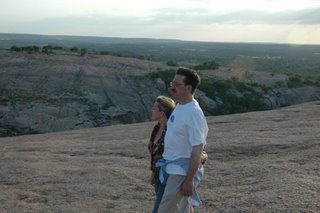
The other day I dragged my parents up Enchanted Rock to watch the sunset. At first my mom wanted to give up, but we kept saying, "just to the next rock". We made it. It was beautiful, and not too hot for Texas.


While I have been home in Austin, I have also had some good meetings with people and organizations. Let me give a little brief summary:

-Soup Peddler. Now we are linked up with the Soup Peddler. For those of you in Austin who buy soup from the Peddler, you can ask that 5% of your order goes to the Finca Project. You can order soup from www.souppeddler.com.

-The Wildthings. I had a meeting with this group of teenage girl environmentalists from Westlake High School in Austin. They are going to be one of our first students of our Cultural Exchange Program. Every year they raise money to go on a trip to help save the environment. This last year they went to Big Sur to help remove invasive plants. We had a great meeting at Wildwood cafe. They were very excited. It made me really happy to see young people (even younger than us) motivated to do good and excited for change. We are still looking for more high schools and groups of students to join our project.

-Audubon Society. I had another meeting at Mother's restaurant with my mom's friend, Burgess, and his good buddy, Bob. Bob is in the process of creating the Latin American committee of the Travis Audubon Society. He is very interested in issues concerning shade-grown and bird-friendly coffee. We had a great meeting and are looking forward to working with each other. Surprisingly, he brought me a copy of the documentary, Bird Song and Coffee: A Wake Up Call, a film about Aguabuena and the coffee crisis. It was an amazing coincindence. He was really excited about this documentary about our community "starring" all of my friends down there. I had gone to the first screening of the film in Aguabuena which had brought many of the farmers down there to tears.

Friday, I am heading back down to the finca. My short return to the United States has been really motivating. I have reports that over 50 of our seedlings have been transplanted to bags. I can't wait to go see how they are doing.

Paz y amor
Eliot

Tuesday, May 30, 2006

Sprouting

PLACE

On the last day of the world

I would want to plant a tree

what for

not for the fruit

the tree that bears the fruit

is not the one that was planted

I want the tree that stands

in the earth for the first time

with the sun already

going down

and the water touching its roots

in the earth full of the dead

and the clouds passing

one by one

over its leaves


This is a poem my mom sent me by M.S. Merwin who was recently descibed by the New York Times as a "Poet of Their Own". He won the Pulitzer Prize in 1971. He and his wife live in a remote part of Hawaii where they are restoring an abandonned pineapple farm. I thought the poem was fitting because....

our first seeds have sprouted!!

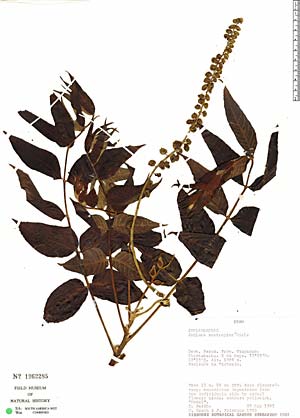
The first seeds to sprout were the "marías" or Calophyllum brasiliense (I have also read they are called the Brasilian Beautyleaf). I was concerned that we were going to have trouble with these seeds because the condition of the seeds was not great, and they typically do not like to be stored for as long as we stored them. But at least 50 of them sprouted just this week. Marias are a very common canopy tree throughout Costa Rica. They are of a medium hardness whose wood is used for furniture, firewood, and sometimes in construction.

maría


The second group of trees to sprout were the "nogales" or Juglans neotropica or Central Amrerican Black Walnut. I just read that these are actually not the same as the North American Black Walnut, which I had assumed. However, these are not native to this region of Costa Rica, but have been brought here from Nicaragua. Now they are becoming very popular because they grow very rapidly. The more I start to look around, the more I see them. Many are planted in agroforestry systems and sometimes for shade for coffee.

nogal


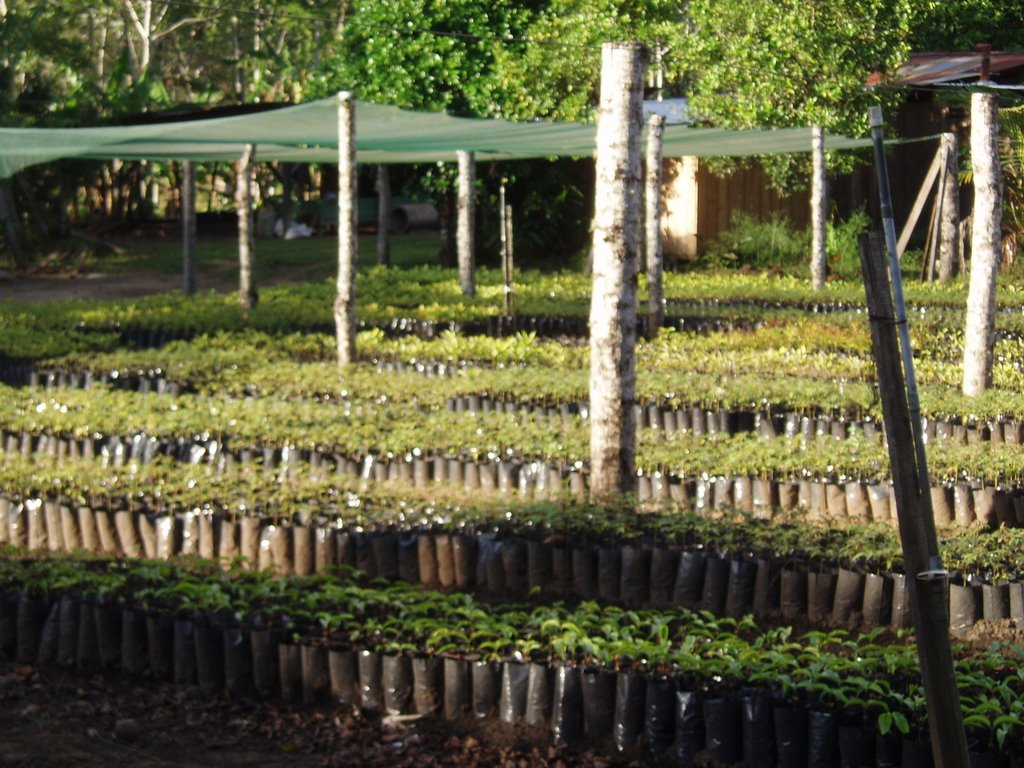
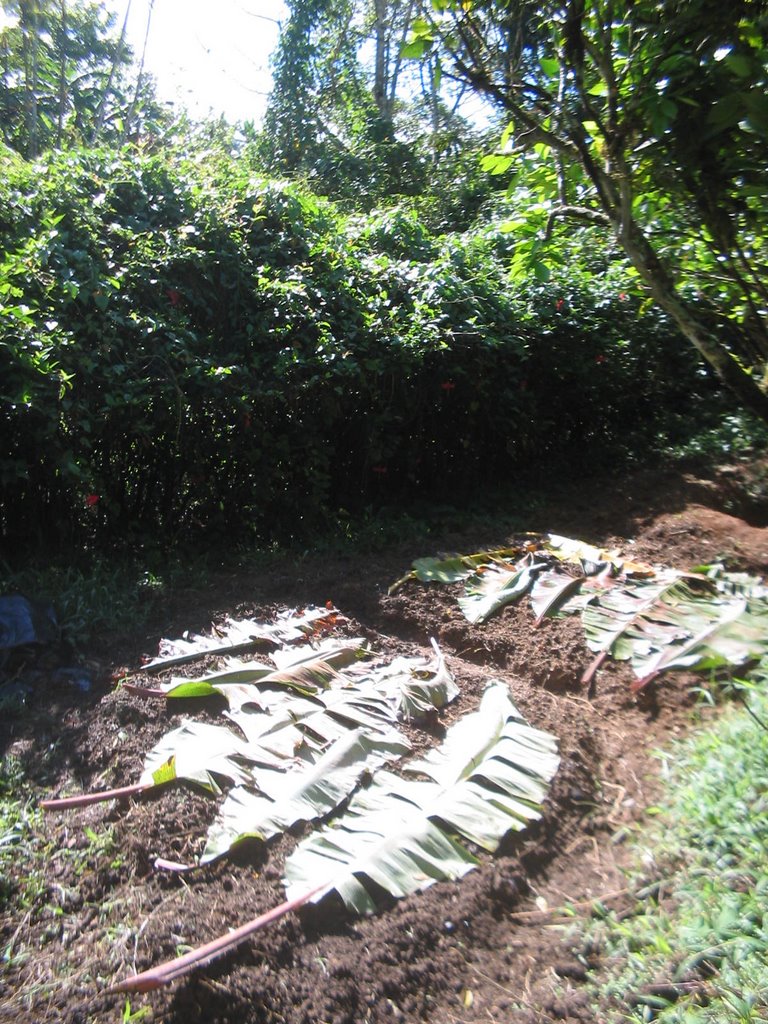
The system we are using to germinate our seeds is based after the methods used in this region to germinate coffee seeds. We begin by dumping the seeds in a shaded seed bed and cover them with banana leaves. Once they reach 20cm or so, we then translant them into a plastic bag with richer soil. We keep the bags in a shaded area for at least 6 months and then transplant them to their final resting place. This week we are moving these seedlings into plastic bags, and we plan on transplanting them next April when the rainy season begins again.

Other seeds I have sprouting on the farm right now are Avocados (Haas), Tamarindos, various palms, and hopefully cacao. Ironically people claim that neither avocaodos, tamarindos, nor cacao will produce fruit here because it is too cold. However, every year people claim it is getting hotter, which I believe, so this is sortof a test for climate change. And if they dont fruit, thats fine, because they are all pretty trees.

Wednesday, May 24, 2006

Semillas Semillas Semillas


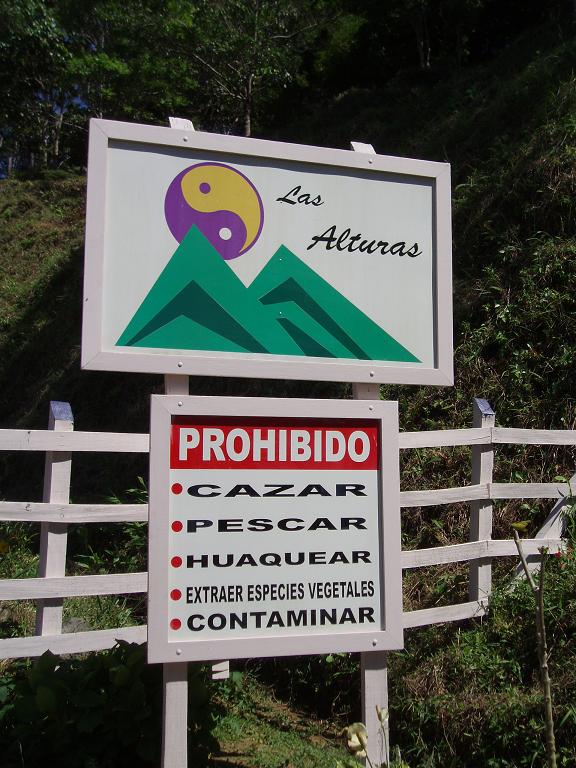
I just came back from another seed collecting mission in the isolated mountain kingdom of Las Alturas de Cotón. If you havent read my previous blogs about it, you should to understand the wierd politics and history of this company town turned sustainable ¿utopian? society.


This trip, I had two Panamanian Indian guides, Carlos and Javier. We took an old Toyota Landcruiser up the dirt roads to the boundary of Amistad International Park. We hiked up past the old dillapidated biological research station, up the trail to Cerro Chai.

Cerro Chai


The Biological Research Center (Las Alturas)


The seeds we collected were Chicarrás, Quiuras, and Jira Colorados. Chicarrás and Jira Colorados are both very large canopy trees with extremely valuable timber. I believe that it is now illegal to harvest these woods because of the threat of extinction. The Quiras are a smaller tree (still quite large) that produce a tomato like fruit that is eaten by birds and other small animals.

Chicarrá


Big Trees


While we were in the rainforest it started pouring. There was nothing to do but get wet and cold. We were nearing 5000 feet, so it gets cold. I tried to ask Javier what group of indiginous people he is a part of. He laughed. "Somos Indios." He told me. I said I know, but what kind. Like in the US we have Cherokees, Navajo, etc. There used to be Aztecs, Mayans, and Incans. He said the Aztecs are from Mexico, we are from Panama. Cristopher Colombus came over and called us "Indios" so we are "Indios". You know like "Indigenes". I asked him which he preferred, he looked at me like I was rediculus, "Indios" he said.

Javier is 17. He came from the Bocas Del Torro region of Panama. Indios can pass freely from Panama to Costa Rica without a passport. Many come as seasonal workers to work with coffee or to towns like Las Alturas (if there are towns like this anywhere else). Javier didnt finish high school. He didnt like the options that that type of education would lead to. When he was in Davíd, he found an advertisement to work in Las Alturas. Now he is a sort of apprentice to their reforestation project.

Reforestation Nursery at Las Alturas


Javier asked me if I was married. I said I was too young still, people in the States dont get married till theyre older. He asked me when I plan on getting married. I said, probably when Im in my 30s. He said that if people wait that long here, everyone will think that they are gay. He is only 17, and people give him a hard time for not being married yet. Most indios get married when they are 15. He doesnt want people to think he is gay. He needs to find a wife. He told me there is a guy in Las Alturas that isnt married and everyone says hes gay. The town doesnt have much to do but gossip.

Wednesday, May 17, 2006

Marcos Lobos

Marcos Lobos sells popcorn and cotton candy at all the rodeos in Coto Brus. His wife makes tamales. Marcos rides an old, beat-up motorcycle and has a green helmet. Once I tried to say in Spanish that he is "quite a character", but I made the mistake of calling him a cartoon character (characatura instead of personaje). My mistake was more approriate. His gray hair is alost completley white. He is a small man with a big belly. He smokes cigarettes, and shouts instead of talking. Marcos owns the farm next to us. He doesnt live there; he lives in town.

Today it started raining at 12:23 pm. As soon as it started, I heard the familiar shout/grunt announcing someones presence at the door. I should have realized it was Marcos. Marcos talks fast, and if you dont understand him, instead of slowing down, he just shouts louder. He wanted a break from the rain. We sat on the front porch. I made coffee, and we sat there for an hour and a half playing dominoes. He knew how to play, but I tought him the California way of making points in multiples of 5. He caught on fast. I was surprised at how fast he could count. I still won all the games though.

After playing for a while, we started talking about reforestation. If you havent read or dont remember, Marcos is the man who cut down our one old growth tree. I dont know if it was a joke, or maybe I misunderstood him, but he told me if I wanted to cut down any of his trees because they were too ugly, I could. I didnt really understand. He shouted it at me again. Maybe it was a way of making ammends for what he did, an eye for an eye a tree for a tree. I told him the only thing I was worried about was a poró tree that is close to falling on our house. He told me I could cut it down. Thanks Marcos.

We kept talking. He liked the idea that we would be rich one day after he died when we harvested the trees we planted. I started to explain that we arent going to harvest them, that we are trying to grow trees to help the environment of the region and the world. I explained the importance of tropical rainforests. He said he understood. But he was concerned about how to make money. He told me he thinks the cooperative is going to fail here, he has no faith in it. He sells popcorn and cotton candy. He said he maid $400 at the last rodeo. That is alot of money here. His rents his farm out to other farmers. The rest of it he lets go to weeds. He wants to sell it. He is asking way too much.

I am starting to like him. Julietta asked me if we smoked "la pipa de paz". "Tal vez," I said, Maybe. When he got up to go, I asked him if he minds riding his motorcylce in the rain. He said he has been doing it his entire life.

Pictures and more "characaturas" to come.

-Eliot

Thursday, May 04, 2006

¿Fair Trade?

by Eliot Logan-Hines

Alot of consumers in the United States are becoming familiar with "Fair Trade", hoping to bring about a change in the treatment and payment to workers and farmers in "Third World" countries, by cutting out middlemen and establishing standards and regulations. "Fair Trade" is not an international standard, therfore to be certified in England requires a different beaurocracy than being certified in the US. This is taken from FairTradeUSA´s website, http://www.transfairusa.org/:


The principal criteria of Fair Trade certification are:

-Fair prices for farmers and decent working and living conditions for workers
-Direct trade with farmers, bypassing middlemen
-Free association of workers and co-ops, with structures for democratic decision-making
-Access to capital
-Sustainable agricultural practices including restricted use of agrochemicals

I want to give a brief overview of my visit to a certified "Organic-Fair Trade" coffee farm and cooperative in Nicaragua, and an explination for my disillusionment with any idea of "fairness".

I visited a coffee growing community in the mountains above Matagalpa, Nicaragua. The "cooperative" that processes and markets the coffee of these group of farmers is called Cecocaphen RL. It is not "fair" to look at this organization and current state of business without knowledge of the last 30 years of Nicaraguan history (or, really, 500) Please read my blog, A brief history of Nicaragua, to get a slight picture of the current problem.

Coming from a coffee-growing community in Costa Rica, with two of its natives, we all couldn't believe how poor these Nicaraguan farmers were in comparison. All of the houses have dirt floors. The village is wired with electricity but there are frequent black outs and brown outs. There is no tap water, only well water that needs to be filtered. The bathrooms were only outhouses, no porcelin thrones like Nicaragua´s "Rica" neighbor. No one owns a car or motorcycle, hardly any have bikes. But amid all this poverty, they grow "Organic Fair Trade" coffee.

Whereas in Aguabuena, where high pressured tap water poors out of (relatively) hot showers, and teenagers ride their dirt bikes up and down the main street every night complaining of boredom, only to go home and watch dvds and listen to reagetón on their big sound systems, in this now seemingly rich town in the country, Aguabuena, the farmers are "too poor" to be certified Organic ni Fair Trade.


A typical house in La Corona, Nicaragua.


The two Costa Rican natives, Julietta and Walter, on the streets of Matagalpa.


¿What is going on?

Cecocaphen (Matagalpa, Nicaragua) vs Coope Publos (Aguabuena, Costa Rica)

Cecocaphen is a second (or maybe third) level cooperative. I dont know how many middlemen end up being between the producer and the consumer (there were still too many to count). It pools coffee from the entire northern area of Nicaragua, comprised of thousands of small-scale farmers. Each of these smaller communities forms a smaller cooperative, that pools together to another regional cooperative, that then pools to the large Sol Cafe processing plant. The coffee is marketed by Cecocaphen to US and European importers. The coffee is shipped by boat from one of Nicaragua´s two ports as green beans. The office of Cecocaphen is a very pretty building up on a hill overlooking the city of Matagalpa. They have air conditioning, a full pot of coffee in the waiting room, skylights, and beautiful gardens.

Coope Pueblos, in our town of Aguabuena, Costa Rica is a small cooperative. There are about fifty coffee farmers that are members of this cooperative and pool their coffee together. It is then processed and roasted in a neighboring community, by a neighboring cooperative (I will write a history of the tragedies that have befallen these cooperative later). It is then marketed by a non-profit (CAN) based out of Santa Cruz, CA, and shipped straight to the doorstep of the consumer in the US or Canada. The office of Coope Pueblos is a modest building with its share of problems. The office is currently also an internet café and is in the process of being certified to sell coffee and espresso drinks.

It is hard to really know which farmers gets paid better. Being Fair-Trade, Organic certified, the Nicaraguan farmers should receive $1.41/lb ($US, everything is in US$). That is the going rate, even Starbucks´. In Aguabuena, farmers sell 100 pounds for $100. So it seems like the Nicaraguan´s got the better deal, but wait. The Costa Ricans (by Costa Rica, I only mean farmers of Coope Pueblos) sell theirs as whole berries with the red skin and everything. The Nicaraguans (and by this, I mean Cecocaphenés) do the first stage of processing the coffee, removing the berries skin, at home. This requires more work and more labor. These "mini beneficios" are found in almost every farmer´s farm. They then dry the beans, thus loosing water and weight to sell them for $1.41. So, I dont know which farmer´s get a better deal. But I can tell you that the Nicaraguans have dirt floors.

But then again, this isn´t Cecocaphen´s fault. The government of Nicaragua is beyond broke. The current ex president is under house arrest for embezzling the entire countries GDP and international aide, while running the country out of his luxurious home; not to mention, the history of economic manipulations by Uncle Sam. A cooperative like Coope Pueblos could never exist in Nicaragua. The Costa Rican government gives major economic help to "Cooperatives". Cooperatives can qualify for low interest loans and tax breaks, but in Nicaragua, nothing. So what does it mean to be a Cooperative in Nicaragua?

They have a democratic structure. Each mini cooperative has an elected representative that sits on the board of the regional cooperative which has an elected representative that sits on the board of Cecocaphen. In Nicaragua, to survive at all as a business you have to sell out to the big guys. You can´t function as a little town cooperative, you have to have play the major leagues. The image I will never forget after touring the processing plant, was coming back to the main office where we were given a lesson on aromas and flavors by the official taster/quality control of Cecocaphen. He was a little man with a moustache who slurped the coffee very loudly, swished it around in his mouth, wrinkled his nose, and spit it out in the trash can. He spoke of the hints of movie-theater-popcorn-butter and apricots. All I could think was that the women working the assembly line probably had no idea what either of those two things smelled like.


Tasting with Cecocaphen. Josh Mills with the dirty tee shirt is tasting coffee, the taster is in the background with his apron and moustache, Alfredo, a young coffee farmer, is in the foreground.


These women are sorting through coffee beans as part of Cecocaphen´s high quality standards. There are seventy women in this room. They work 8 hours a day with a 1 hour break. They get paid $3/day. This is Fair Trade.

And then we come back to Aguabuena, a now seemingly small and middle-class cooperative, where Walter ships out each weeks shipment of coffee. There are only a few people that work at the processing plant. Everyone here has free time to talk, even the coffee roaster while he is roasting up the French Roast. He jokes that only Estadounidenses like French Roast. The cooperative here doesnt have enough money to buy its fair trade certification. Most of the cooperatives here only sell within Costa Rica so there seems to be no rush. CAN is trying to help, maybe in time.

I don´t know whats fair. Cecocaphen doesn´t seem fair. But then again, I have no idea what the conditions are like in Vietnam and Brasil where the cheapest coffee is produced. Maybe this is fair. I don´t want to turn people away from Fair Trade. I think it is an important step. Maybe more important than anything is the change in the awareness of the consumer. We need to know what we are buying and where our $$ goes. But, if you want my opinion, I think you should buy from here, Coope Pueblos. I see the coffee get shipped out each week to each individual consumer. I know the people packing it. It feels like the fairest of the options.

If you want to order coffee from Coope Pueblos, go to http://www.communityagroecology.net/cart/
Friday, April 28, 2006

A little tour of the farm

I finally got a hold of a camera, so I took some pictures of the farm and Aguabuena, so hold on to your hats, and we´ll take a little walk around.

WELCOME TO AGUABUENA


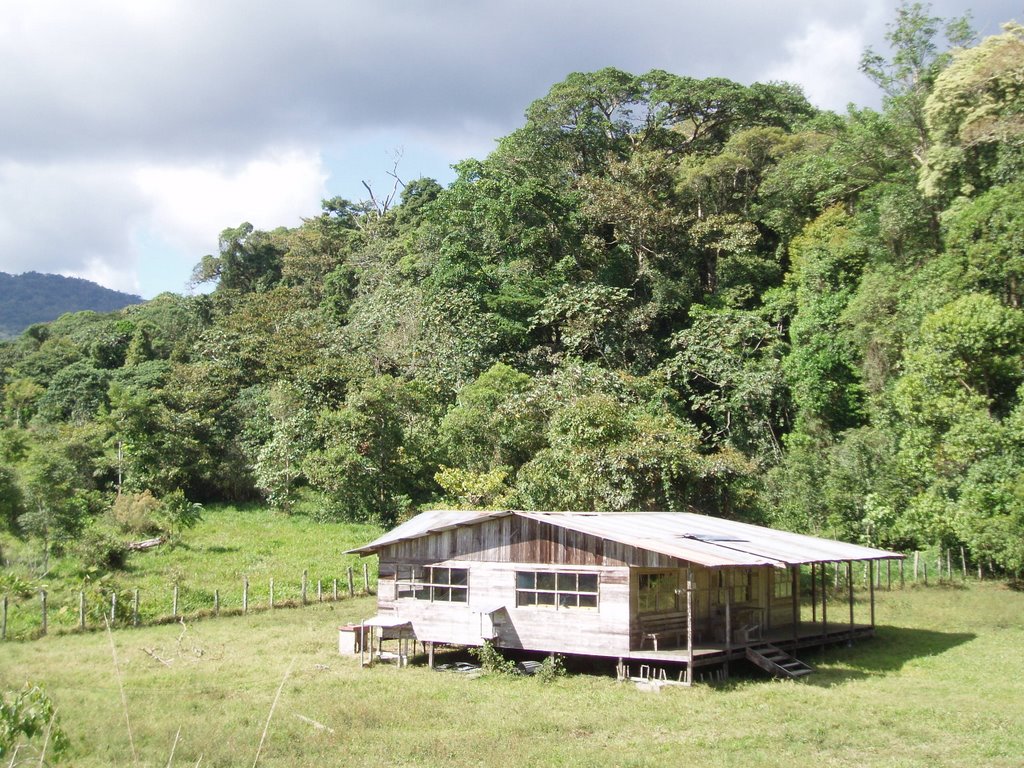
Aguabuena and Coopabuena are a ten minute walk away from each other seperated by the Rio Salto. This hill (which is a mountain if you look at it from the ocean on the other side) rises above Coopabuena to an altitude of over 4000 feet. Santa Cecilia and Santa Teresa are two villages higher up the mountain, Santa Teresa being at the top.


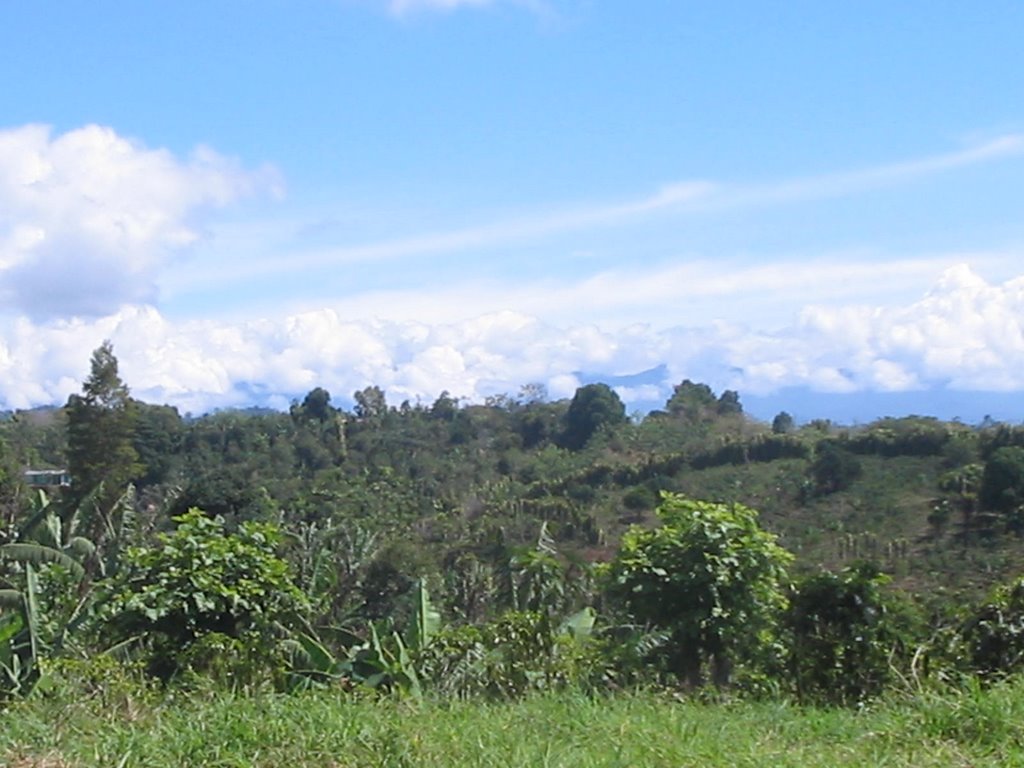
To the north and east of here are the volcanic Talamanca mountains that you can barely make out behind the clouds. These mountains are much higher, rising from 7-1200 ft. This is the home of the nearly inpenetrable cloud forests of Parque Amistad shared by both Panama and Costa Rica. The mountains in this picture are in Panama.
Now to our farm.


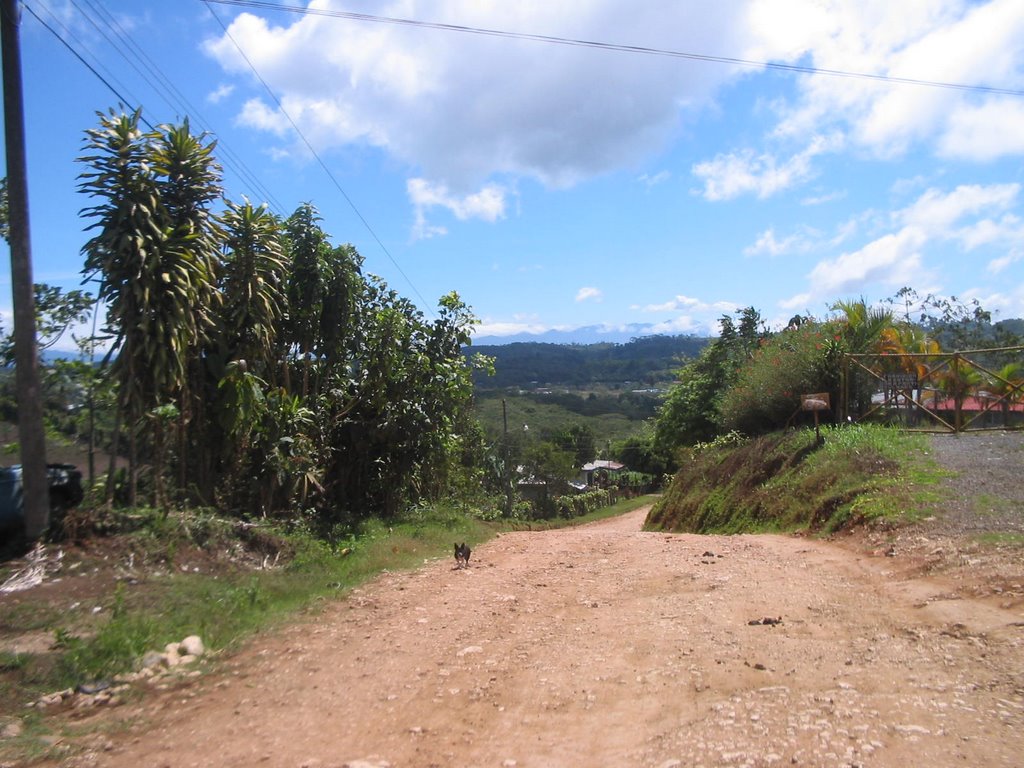
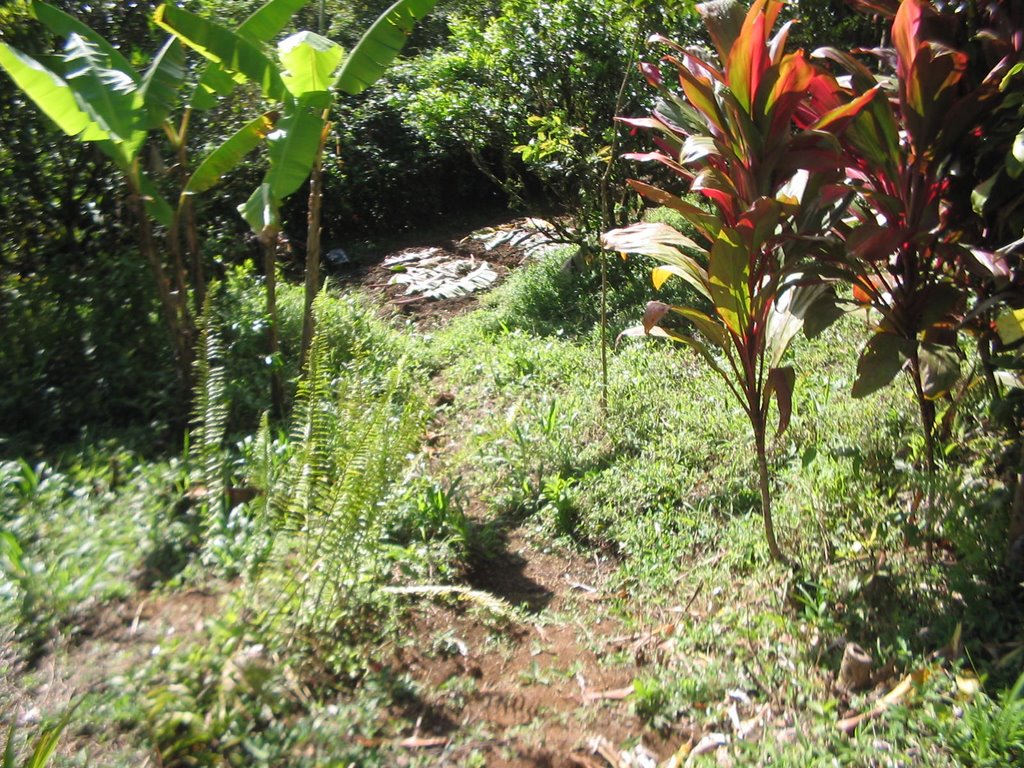
If you follow this road down long enough you will make it to our farm.


The Reforestation Nursery (still under progress)


This week I began the germination of our first seeds. I planted over 6000 seeds. The two seed beds down in the background are the beginnings of our seedling nursery. These two beds contain two different species of trees.

1. maria
Marias are a common canopy tree of this region. The wood is of medium hardness and considered very valuable for furniture making among other things. Because of this, many have been cut down in this region. These trees grow relatively fast. In this seedbed, I planted 1200 seeds. I cover them with banana leaves to protect the seedlings from excessive sun and as an attempt to stop too many weeds from growing.


2. nogal

Nogales are a Nicaraguan black walnut. They are not indeginous to this part of Costa Rica. They grow very fast. They are becoming increasingly popular among the campesinos here because the grow so fast. Since we our goal is to use only indeginous trees for our reforestation projects, we have some reservations about this tree, so I am only germinating 300 seeds. These are in the bed next to the marias.


3. danto

Dantos are an endangered tropical hardwood. The wood is extremely hard and is excellent wood for construction because of its extreme durablitiy although it is difficult to cut through. Many people in this region dont know of these trees, or have forgotten about them because of their scarcity. These trees prefer to grow above 1000 meters in riverbeds. Thus, they make a nearly perfect tree for our project. The only drawback of this tree is that it grows very slowly because the wood is so dense. In this picture I have 4-5000 seeds soaking in water before I plant them in the ground.


After these seeds sprout, I will put each in its own separte bag to grow for at least another 5 months. We plan on begining the transplantation project in a year, next April or May. Next month, I am going to return to Las Alturas de Coton to collect different species.

THE WORM FARM


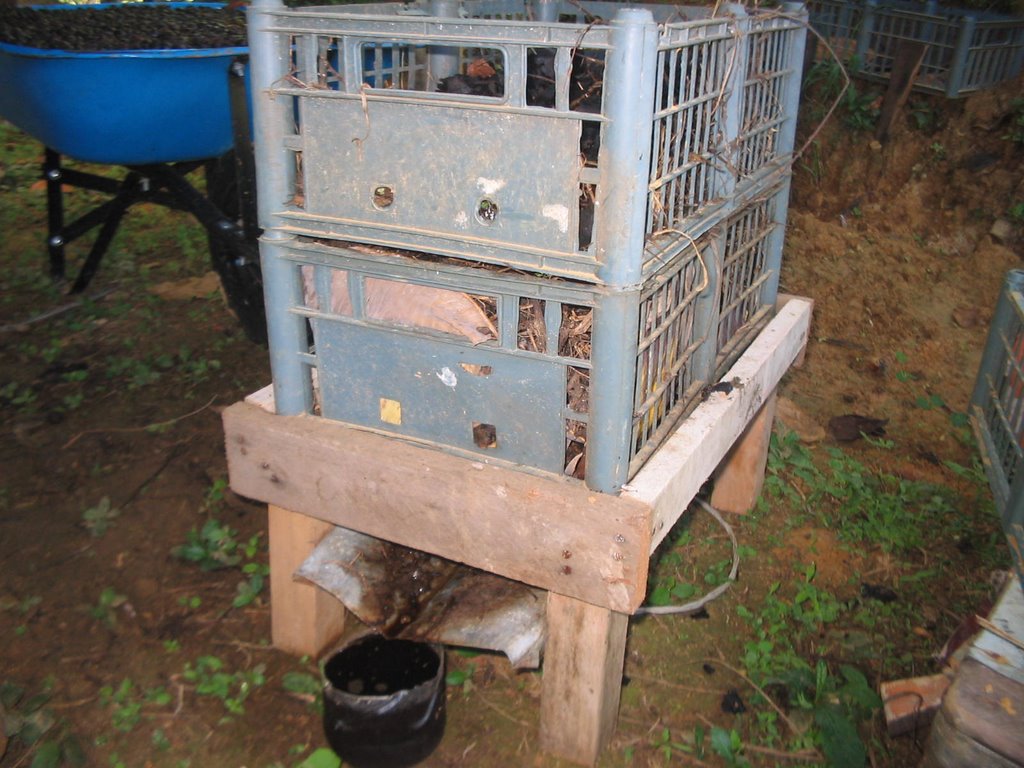
Thomas, our friend from Michigan, is a worm farmer that sells his products in famers markets in the US. He taught us how to cultivate worms. This is the system:


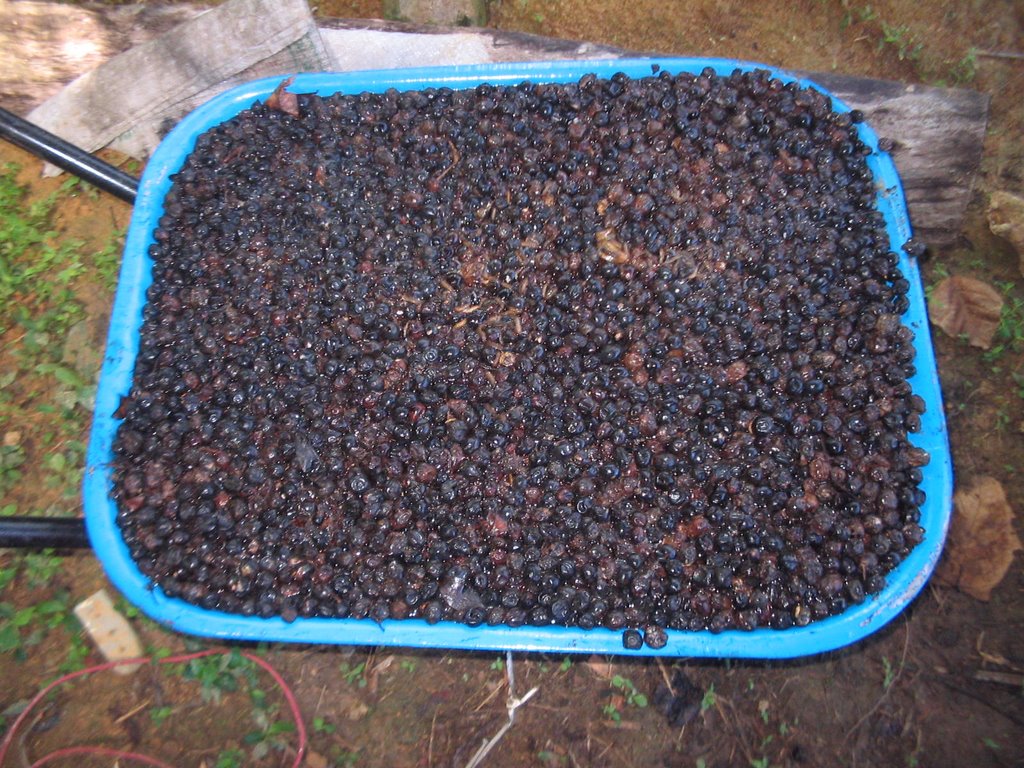
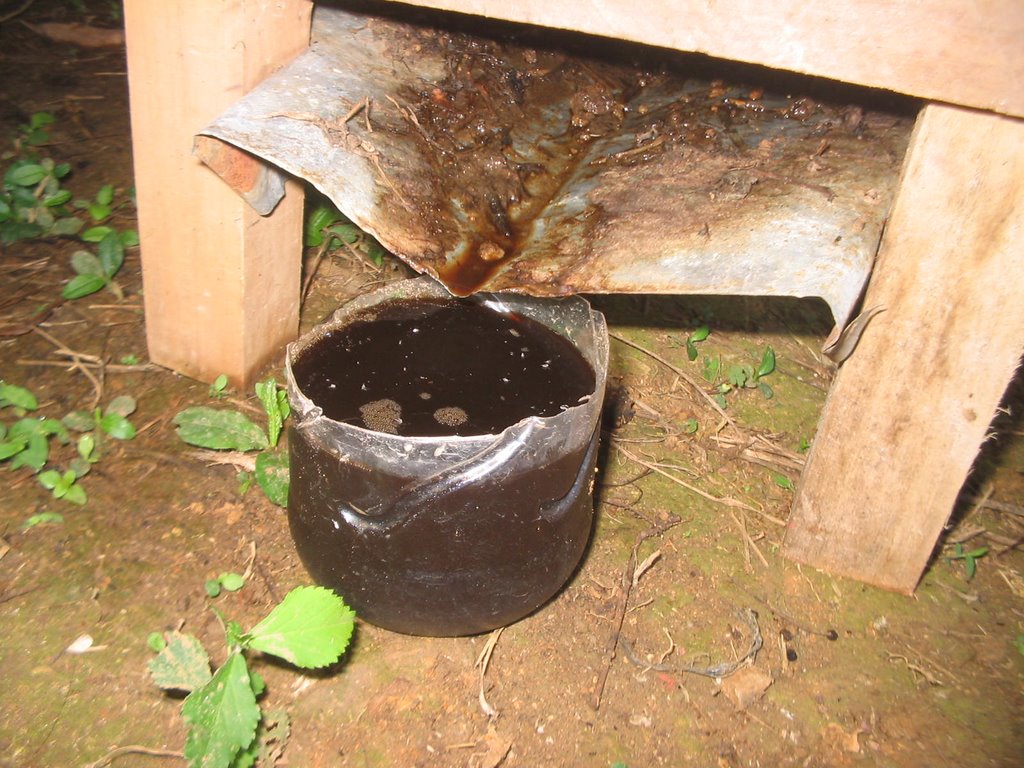
Compost goes in each basket, and as the worms eat their favorites, their poop becomes excellent fertilizer. They slowly move up to the fresher bins, leaving behind enriched compost. We keep the environment wet for them, and the excess water drips down and we collect this worm juice "jugo de lombrisas".


This stuff is extremely potent.

MORE PHOTOS....


This area of the garage serves a double function as a carpentry table (built by Josh Mills) and a resting place to read, drink coffee and swing in the hammock.

Im going to end the picture show with this picture out our back window.


More to come
Eliot

Monday, April 24, 2006

A Brief History of Nicaragua


La Independencia
In 1821, Nicaragua gained its independence from Spain along with the rest of its Central American neighobrs. The majority of the 1800s, Nicaragua was characterized by large land owners and an increasing US interest in transportation systems and fruit production. By the 1920s the US marines were playing the role of the Nicaraguan National Guard to protect US business interests. In 1936, the US withdrew its military presence as President Somoza was elected to power. Somoza set up a corrupt military dictatorship that would last over 40 years.

La Revolucion

In 1979, the Sandanista revolution finally ended the Somoza regime. The FSLN (Frente Sandinista de Liberación Nacional) initiated an agrarian reform, dividing up land from large land owners and giving it or selling it for extremely low prices to poor farmers. Like the story of many countries during this time, the United States would not tollerate this threat to international business, particularly to the large land owning American corperations like the United Fruit Company.

La Guerra

The Reagan administartion began a covert opperation that has become known as the Iran-Contra affair. The administration secretely sold arms to Iran to fight the Iran-Iraq war, and, with the money made on the sell of the guns, funded a right wing counter-revolutionary army (the Contras) to bring down the Sandanista regime. To Nicaraguans, this was known as La Guerra. The World Court finally ruled that this was against against international law. President Reagan publically refused to admit any knowledge of the affair, and then two weeks later made an address admitting his mistakes. Everyone indicted in the affair was eventually pardonned by the Bush Administration. The Contra army (trained by the School of the Americas) was designed to use terroristic tactics to force the public to elect a government that would be more economically favorable to the United States. It succeeded. After two years of starvation, the people of Nicaragua "elected" a government that promoted the neoliberal ideals of the Reagan-Bush-Bush adminitstrations.

With this background, it was an amazing experience to live up in the mountains above Matagalpa with farmers who had lived through these atrocities. When I asked them, they shared with me the horrors of two years of near starvation, standing in lines all day to maybe receive a scoop of rice or beans. Luckily, these were farmers who could mostly sustain themselves with their crops, but many still went hungry. They told me that the fighting never made it to their communities. Many of the boys would leave to fight in the lowlands near Managua, but most of them stayed up in the mountains to wait it out. I found it amazing that they were so hospitable to me, an American, whose government had funded this war.

More on Nicaragua to come.......

Sunday, April 16, 2006

Isla Ometepe


Easter is called Semana Santa in Latin America, and the entire week before Easter is a huge celebration. It is almost impossible to travel during this time because every bus is packed-full of relatives visiting relatives, and buses stop running thursday-monday. In the mad rush to find a boat to the island I had to convince some Nicaraguan soldiers that I was on the list of chosen people to enter the boat they guarded behind chain link fences. The entire beachfront of San Jorge that sits on the western shore of Lago Nicaragua was packed with beer, big speakers, parades, and food vendors. Magically we made it on the boat.

The island is the largest lake island in the world, and the lake has some of the most unique biodiversity. Since it is so close to the sea, many fish swam upriver including bull sharks. Over the years they have adapted to the fresh water, agua dulce, and have become unique species. The sharks have sadly almost disappeared now due to overfishing. The island is home to two volcanoes, Volcan Concepcion (still active) and Volcan Madera (not active).

My friend Josh and I came with Yelena and Joey from CAN (Community Agroecology Network in Aguabuena). We came to visit the Bainbridge-Ometepe Sister Islands Association. The org. is dedicated to aiding the island through various programs including buying and marketing the coffe from the cooperative to consumers in Washington, bringing internet services to the island, and creating an "escuela libre" for students of all ages. Thanks to the hospitatlity of its project managers, Peter and Devon, we had an amazing visit.

The coffe cooperative was hit hard by the difficult political climate of Nicaragua and world coffee market. Like the story of so many coffee towns, it used to be a thriving community but through political corruption and lowering coffee prices, it became a ghost town, now begining to be "revived" by tourism. After the 1990 elections that brought Nicaragua back to the path of neoliberal economics (if you dont know the story of the Iran-Contra affair, I suggest learning about it), the coffee cooperative was forced/coerced by the government (or the United States, World Bank, and/or IMF....) to take big loans that nearly threw them into abyssmal debt. You can check out the cooperative and buy coffee from them through www.coop-cdc.com.

It is very interesting to see the differences between Nicaragua and Costa Rica. Climatically, Lago Nicaragua is drier than Coto Brus, the home of our finca, and much hotter. Culturally, Nicaraguans seem to have more pride, more of a sense of nationality probably due to their more turbulant history of revolutions and civil wars. And economically Nicaragua is a much poorer country.

We are heading up to Matagalpa to visit the coffee cooperative up there. Matagalpa is a sister community of Coopabuena as CAN (Community Agroecology Network) works with both communities. We are going to meet up with Julietta and Walter from Coope Pueblos. It should be interesting. I will keep yall posted.

Paz y amor
Eliot